Showing posts with label iConquerMS. Show all posts

Tuesday, September 1, 2015

Accessing Your Medical Record

Did you know that you have a right to your medical records? It is the law. Most doctors and medical systems are now required to keep patient records in electronic format, called an electronic health record (EHR) or electronic medical record (EMR). But access to those records may not be easy and you may have to look in several places before you begin to find even a small portion of those records.
As a registered member of iConquerMS™ you are encouraged to submit EHRs to help fuel the largest patient-powered research network (PPRN) in the world to focus exclusively on multiple sclerosis.
What is an EHR?
Basically any electronic piece of information regarding your medical care can be considered an EHR. These digital records may include doctor’s notes, lab test results, MRI reports, x-rays, family medical history, prescription medications, history of surgeries, or even diagnostic and procedure codes used for insurance billing purposes.
How can I access my medical records?
  • Visit summaries
Your doctor may provide you with a continuity of care document or summary at the end of each office visit which then becomes part of your medical record. To share this document with iConquerMS™, you can use your printer or a mobile app such as Genius Scan to scan it, save as a pdf, then upload it to the iConquerMS.org website.
  • Paper records
You have the right to obtain a copy of your complete medical record, including doctor’s notes, but excluding notes related to mental health care. Doing so may become very expensive, however, with state-regulated charges for paper copies calculated per page. And, it is very likely that you would not know ahead of time how many pages would be included in your request. A modest 150-page record would cost $50 plus postage in Virginia.
  • Patient portals
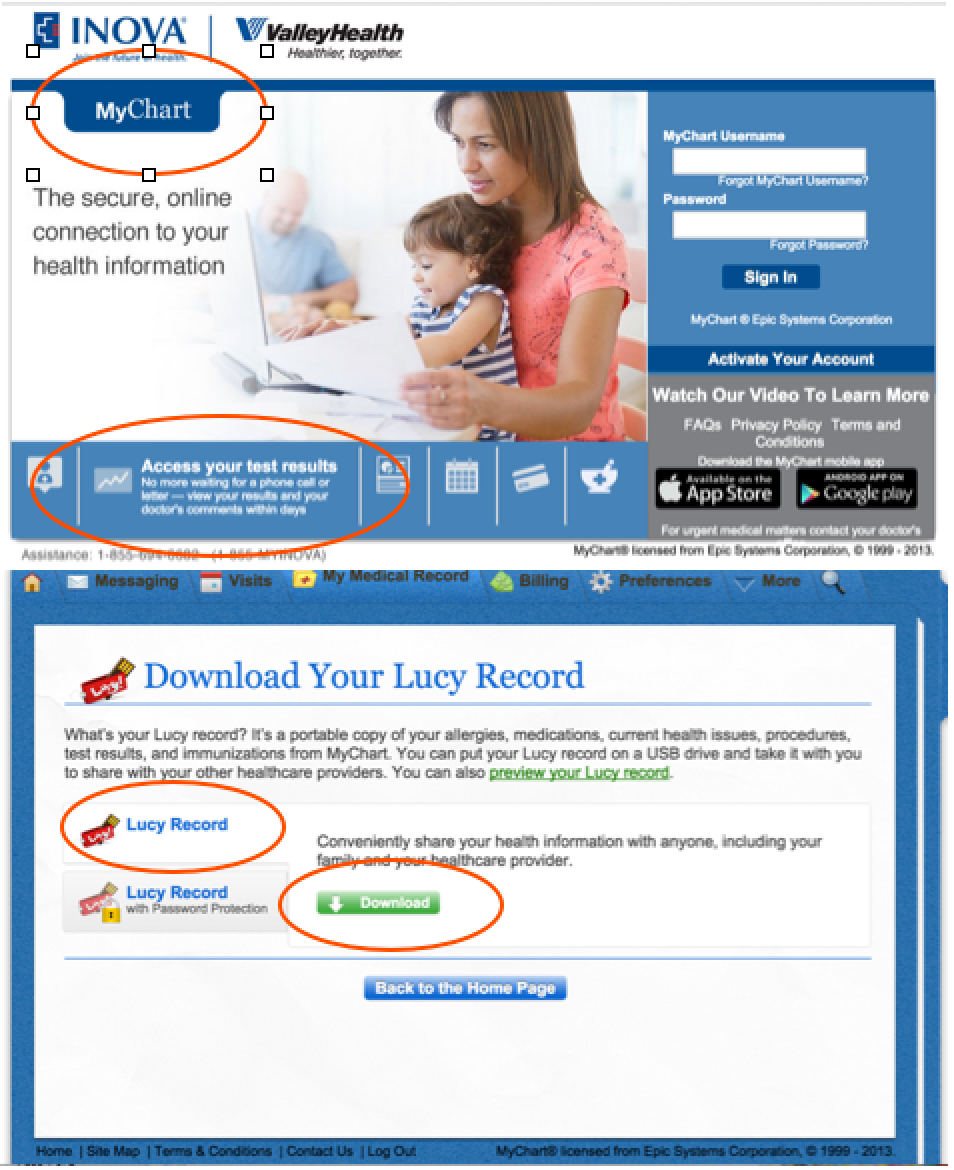
INOVA Patient Portal with LUCYMany healthcare systems are required to offer a patient portal through which information is made available. However, the amount of information which may be easily accessed varies considerably by system. You may find full MRI reports, laboratory test results, x-ray images, or continuity of care documents, but you most likely will not find detailed doctor’s notes.
If your healthcare system uses a “MyChart” patient portal powered by Epic Systems Corp, you may find the option to download your LUCY record which provides you with “a portable copy of your allergies, medications, current health issues, test results, and immunizations from MyChart.”
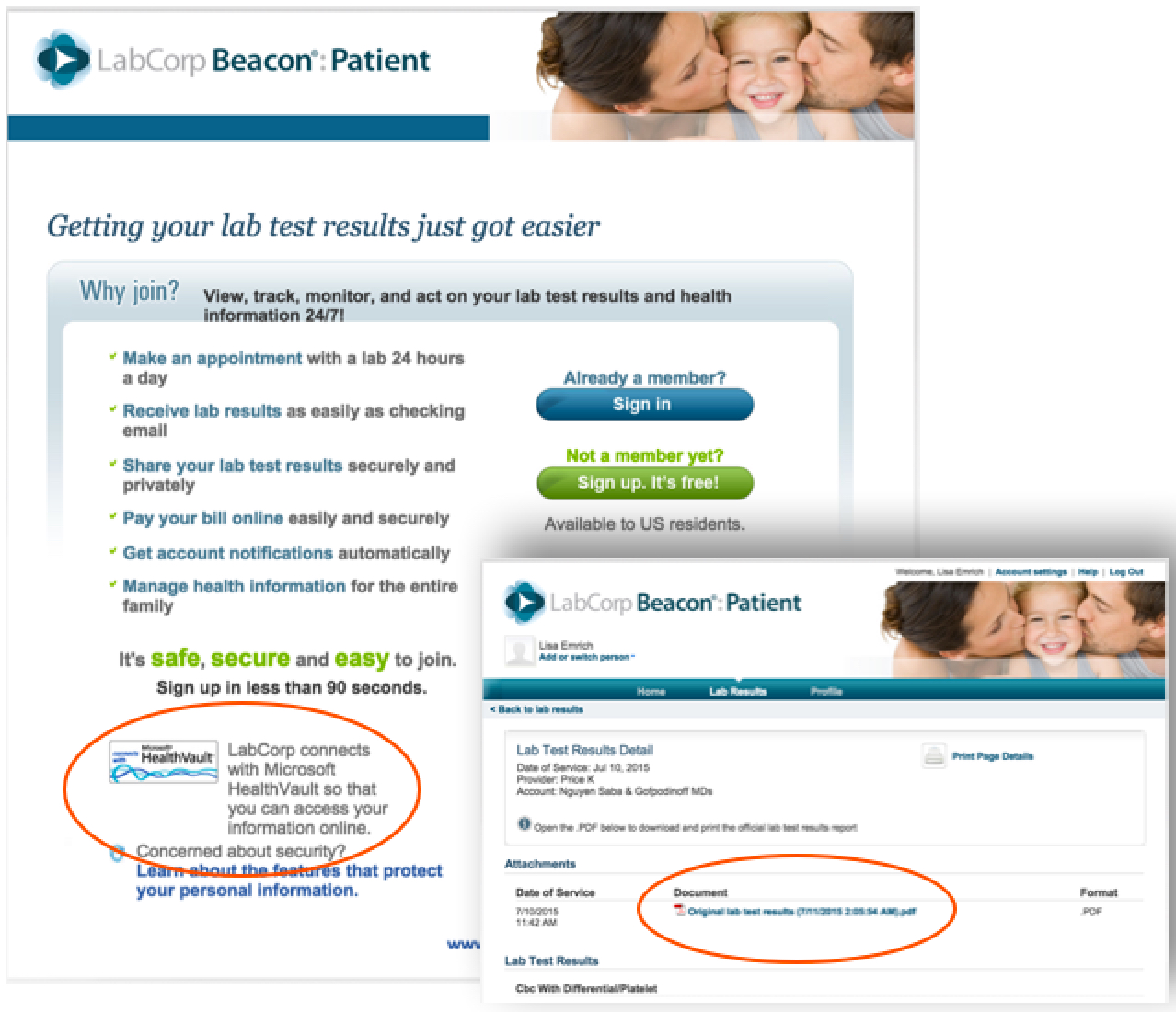
INOVA Patient Portal with LUCYSome laboratory testing companies offer patient portal services, such as LabCorp Beacon®: Patient, where you can view, download, and print test results. LabCorp is one of many health providers that connects with Microsoft®HealthVault™ which offers “secure, online storage of health information.”
  • Insurance claims
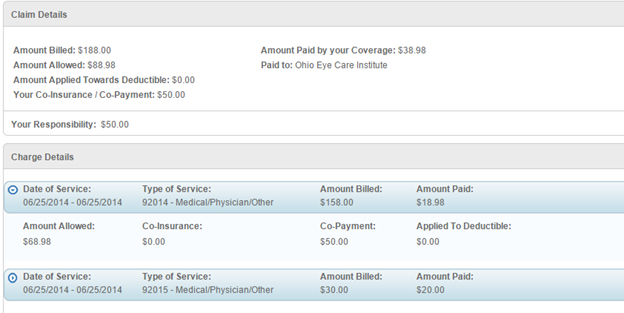
Some insurance companies offer portals through which you can view and download claims information and Explanation of Benefits (EOBs). INOVA Patient Portal with LUCYAlthough my company’s EOBs do not contain meaningful health information, some insurance companies may include diagnostic and procedural codes on their EOBs that provide value in a large database such as iConquerMS™.
Why should I download my medical record?
As you will quickly see, no single doctor or healthcare system has your entire medical history and some of the information you find in your search may be contradictory, outdated, or inaccurate. As the patient, it is your right to collect and compile this information into a more complete record which you can check for errors and take with you to other doctors or facilities to same time and money.
If you are able to download portions of your medical record in pdf form through a patient portal, please do so. Not just for sharing with iConquerMS™, but also to begin building a folder of medical records you can keep on your computer.

Read this post in its entirety:

Wednesday, March 11, 2015

How Are You Sharing MS Awareness?

I joined more than 300 MS Activists on Capitol Hill on March 11, 2015 to lobby Congress to support increased support and funding for MS research. We also asked members of Congress to cosponsor and pass the Complex Rehabilitation Technology bill and the Neuro Data bill which is currently included in the House’s 21st Century Cures bill.


The Accelerated Cure Project for MS (ACP) is supporting MS Awareness by encouraging MS Empowerment. The iConquerMS™ research initiative empowers people with MS to participate in a new research model.

“We are witnessing the self-empowerment of those living with a particular disease to confer together,” says Robert McBurney, Ph.D., President and CEO of ACP, “to share their data singly and in the aggregate as they wish, to raise their voices collectively for a new research model in which they are truly valued, and to express their interests and concerns in partnership with the research community.”

As someone living with MS, you know the disease better than anyone — and your ideas about what researchers should explore are very valuable. As a registered member of iConquerMS.org, you can advance MS research by sharing health data and suggestions for future research topics.

I invite you to join a growing community of people with MS who are excited to be among empowered patients who will guide the future of MS research. Start by logging into your account at iConquerMS.org and go to the “Connect with Research” menu to suggest a topic for research!

Let’s continue to focus on MS Awareness and MS Empowerment during March and year round.


Read this post in its entirety:

MS Awareness Month: Sharing MS Online and On Capitol Hill

Monday, January 26, 2015

Big Data and iConquerMS

So what is meant by ‘Big Data’ in medical research?
I asked Dr. Ken Buetow, the iConquerMS™ project team’s informatics expert from Arizona State University and former director of the National Cancer Institute’s Center for Biomedical Informatics and Information Technology, to explain.

“Big Data in biomedicine refers to large quantities of diverse types of data — clinical care encounters, demographic, geographic, individual clinical experiences, lifestyle, personal preferences, and molecular characterizations from tens of thousands of individuals. With Big Data, one has the possibility of discerning patterns and associations that would be undetectable through traditional approaches,” according to Buetow. “I’m reminded of the Michaelangelo quote that ‘every block of stone has a statute inside it, and it is the task of the sculptor to discover it.’ One might say all Big Data contains insights and it’s the job of the data scientist to find them!”

Big Data has the capacity to turn anecdote into evidence.
The more information that is shared, the better equipped researchers will be to discover patterns associated with smaller, more specific, segments of the MS population. With more data points, our multitude of individual anecdotes and experiences become a pointillistic tapestry of evidence which can begin to answer more interesting questions about the disease and its treatment.

How does it work?
“By embracing the Big Data paradigm, iConquerMS™ enables research that complements traditional approaches,” says Buetow. “iConquerMS™ collects large volumes of diverse data from all who are interested in sharing information. Questions are then asked against the collected data. These questions can come from both the research community and iConquerMS™ participants. Instead of conducting a new research study for each question – contacting new individuals and collecting new data – the data previously shared can be queried and evaluated.”


Read this post in its entirety:
iConquerMS Uses Big Data Approach to MS Research

Thursday, January 15, 2015

Using Big Data to ConquerMS

As a participant in the patient-driven iConquerMS™ initiative, established by The Accelerated Cure Project for MS, I am excited about the potential impact of research arising from topics suggested by people with MS who register at iConquerMS.org.

The type of research one reads about online, such as that investigating new disease-modifying treatments for MS, tends to focus on easily measured disease outcomes such as number of lesions, brain atrophy, or disability progression. However, people with MS may be less interested in lesions and more interested in aspects of the disease that affect their day-to-day lives.

MS patients frequently compare anecdotal notes with each other in forums and support groups. But how do you turn several anecdotes into scientific data? You begin by asking targeted questions of people who have MS; lots of questions among lots of people! What begins to emerge is often called Big Data.

Big Data has become a popular buzzword in the areas of healthcare and medical research. I’ve invited Dr. Ken Buetow, the iConquerMS™ project team’s technical expert and a well known researcher, to answer a few questions to help us understand ways that Big Data may be used to better understand multiple sclerosis.

Read this post in its entirety:
From Anecdote to Evidence: Using Big Data to Conquer MS, An Interview with Ken Buetow, PhD 

Saturday, November 22, 2014

Please Join Me at iConquerMS™

The news is out!! The Accelerated Cure Project for MS (ACP), a nonprofit organization based in Boston that was started in 2001 by a person living with MS, has launched an exciting new patient-centered research initiative called iConquerMS™.

iConquerMS™is a Multiple Sclerosis Patient-Powered Research Network (MS-PPRN) established with a grant from the Patient-Centered Outcomes Research Institute (PCORI), an independent, nonprofit organization authorized by Congress in 2010. PCORI’s mission is to fund research that will provide patients, caregivers, and clinicians with the evidence-based information needed to make better-informed healthcare decisions.

What is iConquerMS™?

The iConquerMS™ initiative is a novel way for you and me and all of us living with MS to work together to fight multiple sclerosis. It provides one centralized location where people with MS are empowered and enabled to securely contribute their health data, connect with others, and submit ideas to advance research.

Each of us is the expert on how MS affects our body and our lives. We have the information and data which researchers need to look for patterns. Each piece of data when combined with hundreds of thousands of other pieces of data becomes what is known as ‘Big Data’ and iConquerMS™ aims to amass the largest single source of combined data regarding MS in the world to date.

How is iConquerMS™ different?

At the heart of iConquerMS™ are people living with this disease, from those with the initial concept, to members of the Governing Board and Committees, to the participants who will contribute their ideas, experience, and data. iConquerMS™ is unique in that it is endorsed and supported by all major MS organizations in the United States, including NMSS, MSF, MSAA, and CanDoMS. Leaders from each organization have joined MS patients, researchers, and experts in the field to serve on iConquerMS™ Committees and Governing Board.

As an MS patient advocate, I am proud to serve as Chair of the Communications Committee for iConquerMS™. When you check out the website at iconquerms.org, you may recognize many familiar names and faces of fellow MSers also serving as committee members and staunch supporters of the initiative.

How can you contribute to iConquerMS™?

Register at iconquerms.org. You will find informed consent information that tells you the details on how your data will be used and how it will be de-identified so your individual identity is not attached to the records.

Enter your demographic data and complete surveys about life with MS. Currently there are four surveys available which took me about 20 minutes to complete after I registered. You may have completed similar surveys for your doctor or other research initiatives. Don’t worry about time, you can always take a break when you need to and come back to complete surveys later.

Share your electronic health records (EHRs), which can be as small as a single laboratory report or as complex as a complete medical history. No bit of data is too small or insignificant and you choose what to share. Detailed instructions are available, but you can always contact someone at iConquerMS™ for help if you have any questions or get stuck.

Submit your questions of what you think researchers should take a closer look at. (This is probably my favorite part.) The research committee, composed of people with MS and key scientists, will sort through our questions, formulate formal research queries, and design the tools to answer those questions.

Share your experiences with iConquerMS™ with everyone you know! We are aiming for more than 20,000 registered participants by next summer. It’s a huge number, I know, but only a fraction of the number of MS patients in the US. We need your help to spread the word and recruit others like yourself who want to help conquer MS.

Connect with others. Later in December, iConquerMS™ will launch a forum for MS patients to discuss any number of topics related to multiple sclerosis and research. You will also receive periodic updates from iConquerMS™ via email (you can always opt out of these) on data gathering and research interests.

Please Join Me Now at iConquerMS.org and Register Today!


Read this post in its entirety:
The Accelerated Cure Project Launches iConquerMS™, A Patient-Centered Research Initiative