Showing posts with label Safety. Show all posts

Wednesday, March 8, 2017

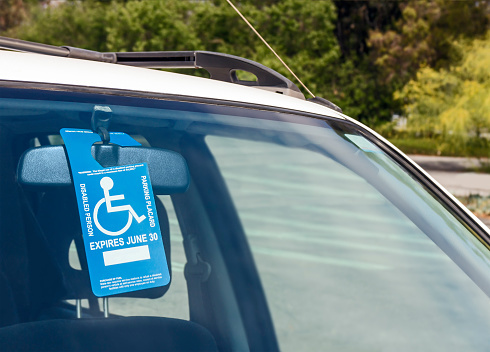
When To Get A Disabled Parking Placard


Handicapped parking is one of the more controversial issues in the multiple sclerosis (MS) community. Many people have mixed feelings about the need to park in designated parking spaces that offer some level of increased access to public and private facilities. The social stigma and lack of understanding from others can make the decision to obtain a disabled parking permit a difficult one.

While I’ve never been subject to insensitive comments — “but you don’t LOOK disabled” or “you really shouldn’t be parking there” — I do remember considering whether getting a permit might be a good idea or not. I had only been diagnosed with MS for about one year and was managing my limitations well, but I knew that it would be easier to get around if I had one.

Read this post in its entirety:
Why Should You Get a Disabled Parking Placard?

Thursday, December 20, 2012

Cognitive Skills and Driving in MS

How do you know if you should or shouldn’t be driving?

Research has found that information processing and visuospatial skills are predictive of driving performance among persons with MS. Cognitive tests, specifically the Symbol Digit Modalities Test (SDMT) and the Spatial Recall Test (SPART 7/24), may be useful as screening methods for identifying the potential impact of cognitive impairment on driving (Schultheis, 2010).

However, Dr. Akinwuntan, a professor at Georgia Health Sciences University, says that the current practice is to administer 15 to 22 different tests that can last up to three hours and cost as much as $450 to patients with MS who need to be evaluated for driving appropriateness.

Read this post in its entirety:

New Study to Test Driving Ability and Cognitive Function in Multiple Sclerosis

Monday, December 17, 2012

Driving and MS

Studies indicate that automobile accidents involving drivers diagnosed with MS occur at a higher rate than those involving healthy drivers of the same age.  About three times higher, according to early research studies on the subject from Denmark (Lings, 2002) and New Jersey (Schultheis, 2002).

Although the majority of people with MS can drive safely, there are symptoms, such as vision problems, muscle weakness, or spasticity, which can make driving more difficult.  During an exacerbation, some people with MS may temporarily give up driving.  Others may lose their license if involved in a serious accident.

According to Dr. Akinwuntan in Augusta, Georgia, patients whose level of disability is low, scoring less than 2.5 on the Expanded Disability Status Scale (EDSS), “are relatively good drivers and those above 7 are not fit to drive.”  Of course, this is a wide generalization which may not apply to your personal situation.

Read this post in its entirety:

Safety, Driving, and Multiple Sclerosis